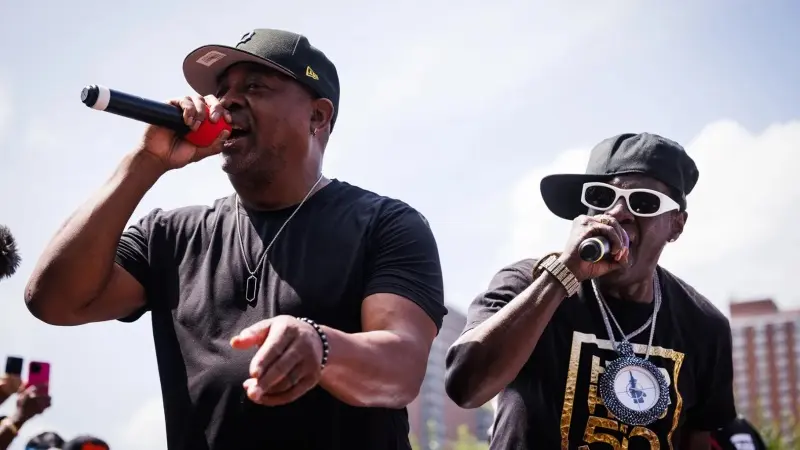
Explore how hip-hop music has influenced social and political issues, shaping conversations on race, inequality, justice, and activism through its powerful lyrics and cultural impact.
Hip-hop music has always been more than just beats and rhymes; it has served as a powerful platform for addressing social and political issues, reflecting the lived experiences of marginalized communities.
From its roots in the Bronx during the 1970s to its global reach today, hip-hop has grown into a cultural movement that not only entertains but also educates, provokes thought, and inspires action.
The genre has given a voice to those who have historically been unheard, using lyrics and storytelling to highlight issues such as racism, poverty, police brutality, and systemic inequality.
As the world changes, hip-hop continues to evolve, remaining a key medium through which artists challenge the status quo and push for progress.
This article explores how hip-hop has influenced social and political movements, giving a voice to the voiceless and shaping public discourse.
1. Hip-Hop’s Roots in Social Commentary
Hip-hop’s beginnings were deeply intertwined with the socio-political conditions of African American and Latino communities in New York City during the 1970s.
As these communities faced systemic poverty, violence, and racial discrimination, hip-hop emerged as a form of resistance. It became an outlet for expression, where artists could address the struggles they saw around them.
Early pioneers like Grandmaster Flash and the Furious Five tackled these issues head-on with tracks like “The Message,” which painted a vivid picture of urban decay, poverty, and the hardships faced in inner-city neighborhoods.
With lines like “Don’t push me, ’cause I’m close to the edge,” The Message gave voice to frustrations shared by many and helped establish hip-hop as a platform for social critique.
2. Race and Police Brutality
Few genres have been as effective as hip-hop in shining a light on the issue of police brutality. Groups like N.W.A pushed this conversation into the mainstream with their controversial track “F Tha Police” in 1988.
The song’s raw, unfiltered anger at law enforcement’s mistreatment of Black Americans was met with significant backlash, including warnings from the FBI. However, it also ignited a crucial conversation about racial profiling and police violence that resonates today.
In more recent years, artists like Kendrick Lamar, J. Cole, and Run The Jewels have continued this legacy, addressing police brutality and systemic racism in their music.
Kendrick Lamar’s “Alright,” for example, became an anthem for the Black Lives Matter movement, with its optimistic yet defiant chorus, “We gon’ be alright.” The song gave hope to those fighting against police violence and became a rallying cry during protests.
3. Hip-Hop as a Platform for Political Activism
Beyond addressing social issues in lyrics, many hip-hop artists have taken their activism off the stage and into the streets. Public Enemy, led by Chuck D, was one of the first groups to merge politically charged lyrics with direct activism.
Their music, including tracks like “Fight the Power,” challenged listeners to question authority, resist oppression, and take action.
Artists such as Tupac Shakur and Nas expanded on this, blending messages of empowerment with calls to address broader systemic issues, from economic inequality to mass incarceration.
Tupac, who frequently referenced his own experiences with poverty and violence, emphasized the need for unity and change, urging young people to rise above their circumstances.
In more contemporary hip-hop, Chance the Rapper has used his platform to advocate for education reform and criminal justice initiatives in Chicago, while Killer Mike, one-half of Run The Jewels, has been an outspoken advocate for political involvement, urging Black Americans to vote and engage with their local government to enact meaningful change.
4. Challenging Gender Norms and LGBTQ+ Issues
Although hip-hop has often been criticized for its treatment of women and LGBTQ+ individuals, there has been a shift in recent years towards more inclusive narratives.
Artists like Young M.A., Lil Nas X, and Tyler, The Creator are challenging traditional gender norms and confronting homophobia within the genre.
Young M.A., an openly lesbian rapper, has challenged the hyper-masculine culture of hip-hop, gaining respect for her lyrical skill while being unapologetic about her identity.
Lil Nas X, with his hit “Old Town Road” and his boundary-pushing visuals, has become a symbol for queer visibility in hip-hop. His openness about his sexuality, combined with his commercial success, represents a significant shift in the genre’s willingness to embrace LGBTQ+ artists.
These artists are not only expanding hip-hop’s lyrical content but also challenging long-standing cultural norms within the genre, contributing to broader discussions on gender and identity in society.
5. Economic Inequality and the American Dream
Hip-hop has long been associated with the concept of the “come up”—the idea of rising from poverty to wealth through talent and hard work.
This narrative is often seen in the stories of rappers like Jay-Z, Biggie Smalls, KatellKeineg and 50 Cent, who turned their personal struggles into commercial success. Their music reflects both the hope and challenges of achieving the so-called “American Dream.”
However, many artists have used their platform to critique this ideal, pointing out the systemic barriers that make it difficult for marginalized groups to achieve success.
- Cole, in songs like “Love Yourz,” emphasizes the value of self-worth over material success, challenging the capitalist ideals often glorified in the genre.
In doing so, hip-hop continues to provide a critical lens through which listeners can evaluate their own circumstances and the inequalities embedded in society.
6. Hip-Hop’s Global Impact on Social Movements
Hip-hop’s influence isn’t limited to the United States; it has become a global movement that speaks to struggles in communities around the world. In places like South Africa, Palestine, and France, local hip-hop artists have used the genre to highlight political and social injustices.
These artists adopt the genre’s rebellious spirit to resist authoritarian regimes, call for social reform, and unite communities facing oppression.
Hip-hop’s ability to transcend borders and languages underscores its power as a tool for activism and social change.
In every corner of the globe, the genre amplifies voices that demand to be heard, whether in the fight against apartheid in South Africa or for the rights of immigrant communities in Europe.
Conclusion
Hip-hop’s influence on social and political issues is undeniable. From its early days of giving a voice to marginalized communities to its current role in shaping global movements for justice, the genre has consistently pushed boundaries, challenging listeners to think critically about the world around them.
As hip-hop continues to evolve, it remains a vital force for social change, providing a platform for activism, empowerment, and solidarity in the face of ongoing inequality.